
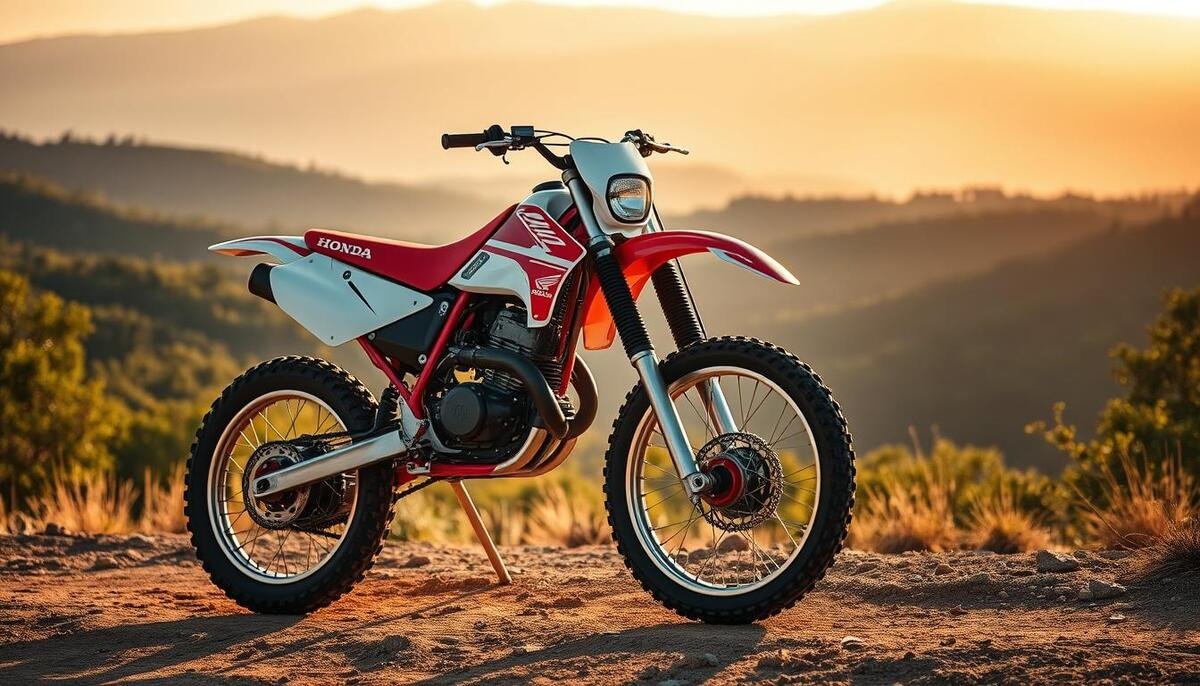
Vic Motorcycle Wreckers · Derrimut, Melbourne
Chasing a part for your Honda XR500? Tell us the make, model and year and we will check what is on the shelf and in the yard.
Tell us about your bike and we’ll get straight back to you.
Honda XR500: Specs, History & Used Parts in Australia
The Honda XR500 landed in 1979 and made a point. It was the first of the XR line. Everyone else was going smaller and lighter, and Honda put a big four-stroke in the dirt.
The 498cc motor was the clever bit. It ran four valves under a pentroof head and made a solid 36 bhp. At 288 lb ready to ride, it made people rethink what an off-road bike had to be.
The first one came with a 23 inch front wheel. That changed in 1981 when Honda fitted Pro-Link rear suspension and dropped the front down to a normal 21 inch. Both changes made it a better bike.
Here we go through the engineering, how it rides and why it still matters. Whether you are doing one up, riding one or just reading, this covers the lot.
Honda XR500 Key Takeaways
- The Honda XR500 broke new ground when it came out in 1979.
- It ran a 498cc four-stroke with some very clever gear in it.
- It went against the trend of smaller, lighter bikes.
- It made 36 bhp and weighed 288 lb.
- Honda changed the suspension and wheels a fair bit over the years.
- It holds a big place in off-road history.
- Riders and collectors still want them.
Overview of the Honda XR500
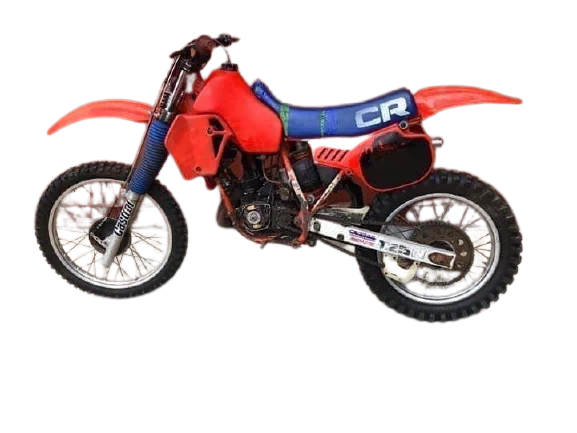
What stands out about this bike is how well the parts work together. Honda did not bolt a motor into a frame. They built the whole thing as one.
At the heart of it is a four-stroke single with two balance shafts spinning against the crank. For a big single, it is remarkably smooth.
The head runs four valves in a pentroof chamber, which was well ahead of its time for a dirt bike. It gives you power you can rely on in any going.
At 288 lb ready to ride it feels solid, but it carries the weight well. Riders here found it took to all sorts of ground, from desert tracks to tight forest trails.
Honda went for power you can use rather than a big number on paper. That makes it an easy bike to ride, whatever your level. You could also get it road registered or buy the enduro kit for more go.
History and Legacy
Honda had already done well with smaller four-strokes. The XR500 was them stepping up to the big end of the off-road market, and they knew it would work.
It arrived when two-strokes ruled the dirt. Going the other way, and going big, took some nerve.
How the XR Series Changed
The first XR500 had that 23 inch front wheel. Honda thought a bigger wheel would roll over things better. Riders did not like it: it was heavy and you could hardly buy a tyre for it.
The big change came in 1981 with Pro-Link rear suspension. It made a huge difference to the way the bike handled.
There was an odd bit of gear in the 1981 and 1982 bikes: a six-petal reed valve between the carb and the intake valves, to help it pull down low.
In 1983 Honda gave it a proper going over with the new RFVC motor. That one ran a dry sump, twin progressive carbs, and dropped a good bit of weight.
Every version got a bit better. The bike still shapes how off-road bikes are built, and people still chase them.
Riders here liked how they stood up to outback going. They are built tough, and that is what our tracks ask for.
Engine and Power
Honda got the balance right on this motor. It has plenty of punch and it is still easy to ride.
How the Motor Is Built
The twin balance shafts are the smart part. They spin against the crank and take nearly all the shake out of a big single.
It has a very big bore and a short stroke, so it gets its size from width rather than length. That is why it revs better than you would expect. Compression is kept mild, so it starts easily and lasts.
Power and Torque
The standard bike makes 36 bhp. The 1983 RFVC lifted that to 41 bhp at 6000 rpm. Torque peaks at 34 lb-ft at 5500 rpm, and the curve is flat right through.
| Model | Power Output | Peak Power RPM | Torque |
|---|---|---|---|
| Standard | 36 bhp | 6500 rpm | N/A |
| 1983 RFVC | 41 bhp | 6000 rpm | 34 lb-ft |
| Enduro Kit | 40.8 bhp | 6500 rpm | Enhanced |
The engine’s remarkable tractability means riders can execute tight circles at idle speed, sitting down, with the engine simply thumping along without stalling.
The throttle is sharp and easy to meter. You can feed the power in at any speed, which makes a big bike feel small.
The ignition is all in by 1800 rpm, much earlier than most. That is why it picks up so quickly when you crack the throttle in tight going.
Suspension, Handling and Brakes
Honda did not just copy a motocross bike here. They built the suspension for long days in the bush, and it shows.
The parts work together well over rough ground. It is built to last as much as it is built to work.
Forks and Travel
The forks run springs and oil, no air. Heavy triple clamps with twin pinch bolts keep the steering tight.
The axle sits ahead of the fork legs, clamped in tapered sliders. Honda went for accuracy rather than big fat tubes.
Rubber covers keep scrub off the stanchions. Later bikes got 43mm air-adjustable forks with 11 inches of travel.
The Rear End
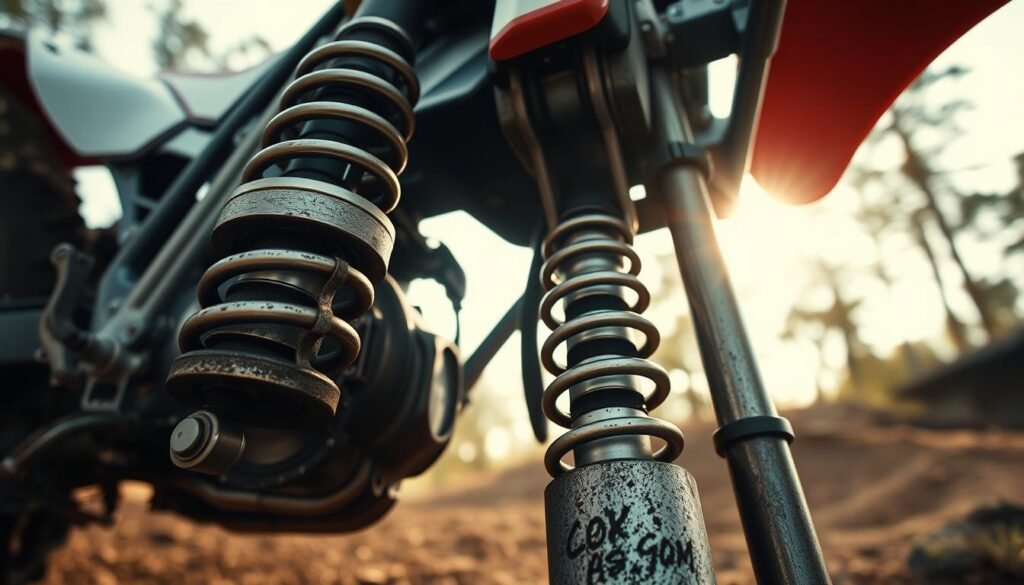
The rear is where it gets interesting. The gas and oil shocks are a huge 16.75 inches long.
They mount right on top of the axle and lean forward. As the spring squashes, the rate builds.
Pro-Link came in 1981 and changed the bike. With a shock-to-wheel ratio near 1:1, the damping had a much easier job.
That let Honda use a lighter swing arm, because the loads go straight into the shock instead of being multiplied.
Frame Design
Honda treated the motor as part of the frame, not just something bolted into it. That gave them a frame that is both strong and light.
Building Around the Motor
There is no cradle under the engine. The motor itself takes the load. That saved weight and made the whole thing stiffer.
The swing arm pivot sits right next to the rear engine mounts, and they share a lug. So the loads feed straight into the mass of the motor, where they can dissipate.
Weight and Strength
It weighs 288 lb ready to ride, but every part sits where it should for the way the bike handles. Honda chased weight everywhere they could.
The frame tubes are the same diameter across the models. For the bigger bikes Honda made the walls thicker rather than the tubes fatter. That is the smarter way to do it.
| Component | Weight (pounds) | Comparison |
|---|---|---|
| XR500 Engine | 85 | 10 lb lighter than Yamaha 500 |
| Bare Frame | 20-23 | Remarkably lightweight structure |
| Ready-to-Ride | 288 | With half tank of fuel |
| Honda 250 Engine | 75 | 10 lb lighter than XR500 |
They went to the same trouble on small parts. Even the spokes are tapered, thick at the hub where the load is and thinner at the rim. Strong where it counts, light everywhere else.
Ergonomics and Controls
Honda thought hard about where the rider sits and what they touch. The aim was a bike that feels right after hours in the saddle.
The seat is lower than you would expect for such a tall motor. Honda sloped the frame backbone down towards the rear to get it there, so it suits a wide range of riders.
Comfort and Control Layout
The push-pull throttle is a good example. The cables come out of the top of the housing instead of the bottom, so rocks and sticks cannot get at them.
Every lever has a cover over the pivot. They are long enough to get real leverage even in thick gloves. The gear lever and brake lever are both sprung, so they flick back after a knock.
The fuel cap is big enough to undo with gloves on. So is the trip meter knob. Small things, but you notice them when you are cold and a long way from home.
| Feature | Design Solution | Rider Benefit |
|---|---|---|
| Throttle System | Top-routed cables | Reduced damage risk |
| Control Levers | Spring-loaded design | Automatic return |
| Fuel Cap | Oversized grip surface | Glove-friendly operation |
| Fender Design | Molded hand reliefs | Easy bike handling |
The guards are wide and stiff, so they actually keep mud off you. There are moulded hand holds at the back for lifting the bike over a log. The bash plate runs the full length and sits tight against the cases.
All of it points the same way: this bike was built by people who ride. That is what riders here liked about it.
Wheels and Tyres
The wheels tell you a lot about how Honda thought. The 1979 bike ran an odd 23 inch front with a normal 18 inch rear.
Honda reckoned a bigger front would roll over rocks and ruts better. It made a longer contact patch and cut into the ground less. But it was heavy, and there were almost no tyres for it.
The 1981 Pro-Link bike went back to a standard 21 inch front. That is still what nearly every off-road bike runs today.
The brakes sit inside conical hubs, which adds strength. The spokes are thicker at the hub end where the load goes, which saves weight without giving anything up.
Honda fitted their own Claw-Action tyres in a 6-ply enduro carcass, with extra lugs on the sidewall for rough ground. They also made sure ground clearance was always more than wheel travel, so nothing grounds out on a big hit.
The whole wheel package trades a bit of grip for sharper steering. Each change came from riders telling Honda what worked.
Off-Road and Enduro
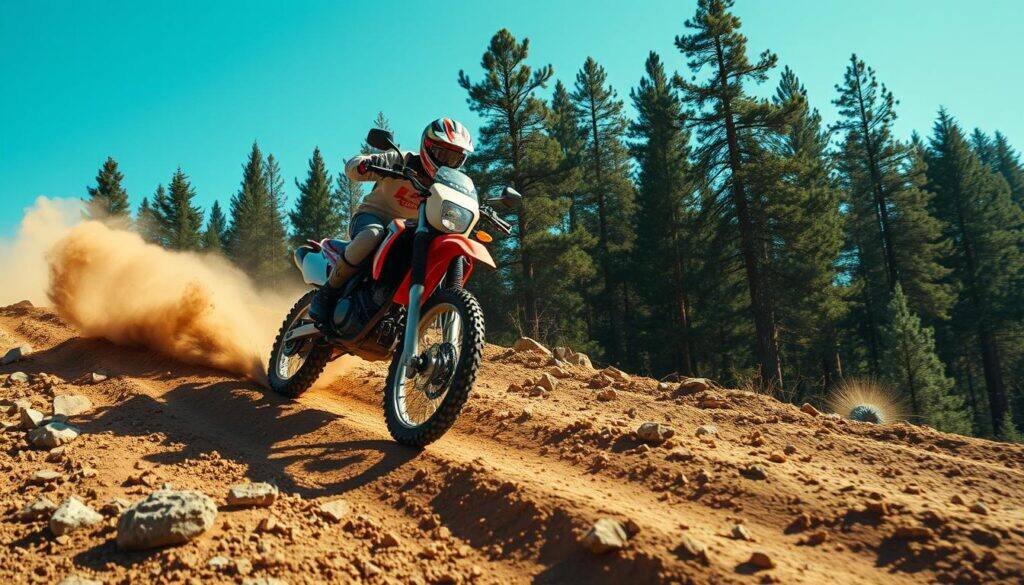
How much you like the way this bike handles depends on how you ride. It tracks dead straight, which is either a gift or a nuisance.
Fast racers sometimes found it too planted. At speed the front tyre grips so hard that changing line takes real effort.
Grip and Stability
Soft suspension and a sharp rear tyre give it a rhythm of its own. The tyre bites, the suspension loads up, the back steps out, then it bites again.
On open fire trails you learn to work with it. Pitch it in, pivot on the front wheel and use the throttle to steer the back.
If you are still learning, all that stability is a gift. The bike does what you expect, whether you are on desert sand or forest loam.
Honda made sure the clearance is greater than the wheel travel, so the frame never touches down on a hard landing. And the motor will crawl along at walking pace without cutting out.
Even at 75 mph it stays settled, rough ground or smooth. The compression release means you can get it going again anywhere.
How It Stacked Up
It had to face both light two-strokes and other big four-strokes. Honda built it to work in the real world rather than win a spec sheet.
Where It Won
At 288 lb it is heavier than a motocross bike. What you get for that is a bike that stays settled and pulls cleanly. It gives you confidence, which matters more on a long ride.
Its closest rival, the Yamaha TT500, weighed much the same at 282 lb. The Yamaha had more top end. The Honda had more down low, and that wins in tight going.
| Model | Weight (lb) | Power Focus | Optimal Speed Range |
|---|---|---|---|
| XR500 | 288 | Low-end torque | 0-75 mph |
| Yamaha TT500 | 282 | Top-end speed | 0-85+ mph |
| Maico 250 | ~240 | High RPM power | Wider range |
Line it up against a lighter two-stroke like a Maico 250 and it holds its own. All that low-down grunt gets it off the line fast. Change the sprockets and you can add top speed without losing the pull.
The bike is happiest between 0 and 75 mph. Even flat out it stays steady. That is a sensible way to build a bike, and it makes it easy for anyone to ride.
Servicing and Upgrades
If you want more out of one, Honda had you covered from the start. They sold kits that turned it into a proper race bike.
The kits came with a high compression piston and a bigger carb. You also got a box of jets and a manual so you could set it up for where you ride.
Tuning and Aftermarket
The kit cam holds the valves open longer for better flow. Add a freer exhaust and you get 40.8 bhp. Honda reckoned that was as far as you could go and still ride it on a trail.
They had a point. Even good riders struggled to hold 45 bhp open. The gearbox got beefed up to cope, and the primary drive gear was made much wider.
All the gears were heat treated for strength. The clutch runs coil springs so it takes up smoothly, which matters with the hard hits a big single puts through it.
The exhaust curves into an over-under layout and tucks inside the frame without choking the flow. Day to day jobs like oil changes stay simple.
The later RFVC bikes ran a dry sump with the oil in a frame tank. That made checking the level and changing it easier again. The head held up fine despite the extra power.
What riders liked is that none of this ruined the bike. You got more go and it still behaved on a trail. Keep on top of the servicing and these parts last.
Specs and Details
The numbers show where Honda put its effort. The 497-498cc motor makes power you can actually use out on the trail.
Key Figures
Power runs from 36 to 41 bhp depending on the year. Honda went for power you can use, not a big peak number. The four-valve pentroof head sits over a flat-top piston.
Compression is a mild 10:1, which keeps it easy to start and easy to live with. It also means it is not fussy about fuel.
The Details
The two balance shafts spin against the crank and take out the shake. For a big single, it is very smooth.
The ignition is all in by 1800 rpm, run off mechanical weights. Being air-cooled keeps it simple, and simple is what you want a long way from a workshop.
The forks are 43mm and run springs and oil, with no air. The gas and oil shocks are 16.75 inches long and lean forward, so the rate builds as they compress.
The twin exhaust lets air flow between the pipes to keep them cool. It clears the frame and still flows well.

Honda XR500: Riding One Here
What works on an Aussie trail is not always what works overseas. Our ground changes fast, so you want a bike that copes and keeps going.
That 0 to 75 mph range is right for trail and enduro work here. You rarely need more. What you need is power you can use everywhere.
On Australian Ground
The 288 lb starts to help on a long day. The weight sits where it should, so you are not fighting it. The seat is comfy and the motor is smooth, which counts after a few hours.
In tight going the motor is the star. It will crawl along at walking pace and never cut out. That is worth a lot in an enduro.
| Feature | Australian Advantage | Rider Benefit |
|---|---|---|
| Air-cooled design | No radiator damage concerns | Simplified remote maintenance |
| Compression release | Reliable restarts on hillsides | Reduced kickback worries |
| Tracking stability | Confidence on loose surfaces | Predictable handling for all skills |
| Gearing flexibility | Adaptable to regional conditions | Optimized performance per terrain |
Being air-cooled suits our heat and our distances. There is no coolant to lose and no radiator to hole. It is a tough bike, and that is what riders here want.
A sprocket change will set it up for wherever you ride. The motor pulls well on any gearing, so you can suit it to your own patch.
At the end of a long day you are not wrecked. It fits most riders, which is a big part of why so many are still going.
Final Word on the Honda XR500
Not many bikes are both this tough and this well thought out. Everything on the XR500 works with everything else.
From the motor to the frame, the parts pull together. That is what gives it the smooth, usable power riders here still rate.
The XR500 proved a big four-stroke could work in the dirt. Honda kept making it better because they listened to the people riding them.
If you want an old trail bike that will keep going, this is one of the good ones. The XR500 is still worth owning.
Honda XR500 FAQs
What sort of engine does the XR500 have?
It is a four-stroke single of about 498cc, with four valves under a pentroof head. Compression is a mild 10:1, so it starts easily and pulls hard from down low. They are known for lasting and for being easy to work on.
How does the suspension cope with rough ground?
There is plenty of travel at both ends. The forks and shocks are set up for enduro work, not motocross. That keeps the wheels on the ground and gives you control.
What about the frame and the weight?
The frame is steel and uses the motor as part of the structure, so it is light and stiff at once. That is why a 288 lb bike still turns well without feeling flimsy.
Is it any good for a tall rider?
The seat sits high, like most enduro bikes, which gives you good clearance. Taller riders usually find it fits well. Shorter riders sometimes fit lowering links.
How does it go on Aussie trails?
Very well. The motor pulls right through the rev range, which suits ground that keeps changing. It climbs well and sits happily on open sections, and the suspension takes the rough stuff in its stride.
Can you still get parts for one?
Yes. There is good support out there for pistons, valves and clutch parts, and plenty of tuning gear. Exhausts and springs are the usual upgrades. Give us a call and we will check what we have in the yard.
Are the brakes up to it?
They are fine for what the bike does. They suit its weight and the speeds you ride it at, and they pull it up without any drama.