

Vic Motorcycle Wreckers · Derrimut, Melbourne
Chasing a part for your Honda XR350? Tell us the make, model and year and we will check what is on the shelf and in the yard.
Tell us about your bike and we’ll get straight back to you.
Honda XR350: Specs, History & Used Parts in Australia
Picking the right mid-size enduro bike is hard. You want enough grunt for open trails, but you still want to throw it around in tight scrub. That is the gap the XR350 was built to fill.
It was the only 350cc enduro bike built in its day. It sat right between the 250s and the 500s. You got real power without the weight of a big bore.
This guide covers the whole bike: the specs, how to look after it, and how it rides. If you own one here, we also cover local trail set-up and where to get parts.
Once you know what Honda was aiming for, it makes sense why people still want them. They built a true middleweight with big-bike power and small-bike feel. That mix works well on Aussie ground.
Honda XR350 Key Takeaways
- The XR350 was the only 350cc enduro bike built in its class
- It sits right between the lighter 250s and the heavier 500s
- This guide is written for riders here in Australia
- Covers specs, servicing tips and how the bike really rides
- Covers parts and how to set it up for local trails
- Big-bike power with small-bike feel
- Suits a wide range of Aussie off-road riding
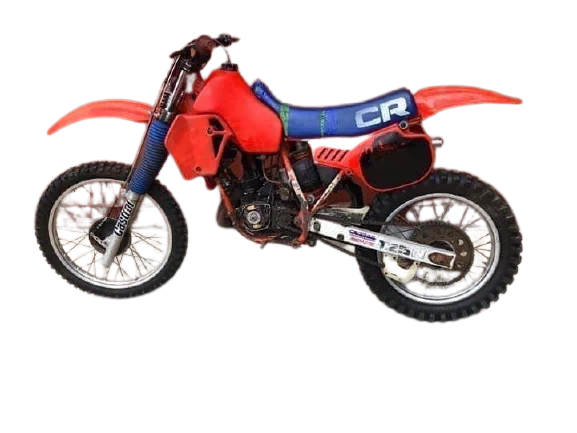
Introduction to the Honda XR350
Aussie bush tracks ask a lot of a bike. The XR350 filled a real gap while everyone else was chasing bigger motors.
Overview and Key Features
Honda was after balance. They wanted the power of a big bike with the feel of a small one.
The engine was the trick. It weighed just 77 pounds, which was very light for a four-stroke single of the day. The radial valve head and twin carb set-up were well ahead of the pack.
It was easy on fuel, too. Riders got close to 100 miles out of a tank, even when working it hard. That made it a good long-day enduro bike.
Where It Sat in the Enduro Market
No one else built a 350cc enduro bike at the time. It had that spot to itself, right between the 250s and the 500s.
The bike is small and light, which suits Aussie trails. On tight tracks, how a bike turns matters more than how big the motor is.
Being a four-stroke, it had far better low-down grunt than the two-strokes it ran against. That made the power easier to use in the rough stuff.
History and Evolution of the XR Series
Four-strokes came into the enduro world through dual-purpose bikes. Honda built models no one else was building.
From XL Series to XR Legacy
In the 1970s two-strokes ruled off-road. Honda went the other way and built the XL range: four-stroke bikes you could ride on the road or the dirt. It broke the mould and led straight to the XR line.
The XR series grew out of those XL bikes. Honda dropped the road side of it and built them for the dirt.
The Move to Four-Stroke
Sticking with four-strokes off-road was a smart call. Low-down grunt, good fuel use and long life won riders over in the end.
When Yamaha did well with the TT500, Honda hit back with the XR500 and sold even more. They were good at taking someone else’s idea and doing it better.
The XR350 was not a warmed-over old model. Honda started again, with a new motor and a new frame that shared next to nothing with what came before.
Design and Engineering
Honda pulled off something clever with this motor. They made it rev hard and kept it small at the same time.
The key was the short stroke: an 84mm bore with a 61.3mm stroke. That keeps piston speed down and lets the motor rev higher.
Engine Design and Radial Valve Head
The radial valve head was the big step. Four valves sit like spokes, angled out from the middle of the chamber.
That let Honda fit bigger valves under a shallow dome. A twin cam follower set-up works them.
Other things Honda built in:
- Caged roller bearings right through, so there is less drag
- A split-gear balancer that takes the rattle out of it
- A cam chain adjuster that reacts to heat, so the chain lasts longer
- Split intake ports with a crossover, for better air flow
Frame and Chassis
The frame was all new. Honda used a full cradle in chrome-moly tube with plenty of gusseting.
There is heavy boxed bracing around the 26° steering head, and good triangulation through the middle.
The motor bolts in at five points, which spreads the load. That frame is a big part of why the bike handles as well as it does.

Honda XR350: Specs and Features
Look at the numbers and you can see the choices Honda made. It is a well balanced bike, and it suits Aussie trails.
Engine Specs and Power
It runs a short-stroke motor: 84mm bore, 61.3mm stroke. That gives a big piston without high piston speed.
A big bore means room for big valves. So it revs hard and still pulls from down low.
| Component | Specification | Feature | Benefit |
|---|---|---|---|
| Bore & Stroke | 84mm x 61.3mm | Oversquare design | High-rev capability |
| Compression Ratio | 9.3:1 | Optimised chamber | Broad power delivery |
| Transmission | 6-speed | Roller bearings | Smooth shifting |
| Fuel Capacity | 3.2 gallons | Plastic tank | 100-mile range |
| Seat Height | 36.8 inches | Progressive suspension | Manageable ground contact |
Carbs and Fuel
The XR350 runs two carbs that come in one after the other. At small throttle openings, only the first one is doing anything.
Open it about a third of the way and the second carb kicks in. You get plenty of air up top without any fancy gear.
Both are slide carbs, worked by a push-pull twin cable. A quarter turn takes you from shut to wide open, and it feels sharp.
Servicing, Tuning and Carb Set-Up
Keep on top of the servicing and this bike will keep going. Here is what it asks for.
Oil, Clutch and Spark Plug
It takes two quarts of good four-stroke bike oil. The pump has an alloy housing and sends the oil through a paper filter you can get at easily.
Lines on the outside feed the top end. Steel lines inside feed the gearbox shafts. That is a big part of why these motors last.
The clutch runs six fibre plates and five steel plates on four coil springs. It wears well and the lever is still light.
The plug sits in the middle and is easy enough to reach. Check it and change it at the normal intervals.
The carbs are the fiddly bit. You have to pull the tank, seat and airbox to get at them.
The first time you take them off, allow about two and a half hours. Changing a pilot jet is much easier, as two screws hold the float bowl on.
For the air filter, pull the left side number plate off. The filter is a double layer job held in by a wire bracket.
To start it, use the whole kick lever and follow through. Do not stab at it, leave the throttle shut, and use the choke when it is cold.
How It Rides on the Trail
If you want one bike that will do tight scrub and open desert, this is a good pick. It comes into its own on long days.
Trail Handling and Suspension
The short wheelbase and 26° steering head make it turn fast. Give it an hour and you will be used to how sharp the front end is.
The power is easy to use right through. It idles smooth, pulls hard in the middle, and still has something up top.
| Terrain Type | Handling Characteristic | Rider Experience | Recommended Approach |
|---|---|---|---|
| Tight Forest Trails | Precise steering | Quick adaptation needed | Moderate throttle control |
| Open Desert Sections | Stable at speed | Confidence-inspiring | Full throttle possible |
| Sandwashes | Predictable front end | No headshake issues | Steady power application |
| Steep Hill Climbs | Strong low-end torque | Second gear capability | Consistent throttle input |

Riding One Here
Aussie riding suits this bike. The seat is comfy and the controls fall to hand, so you can ride it all day without getting sore.
The throttle is sharp, though stock jetting gives it a small flat spot just off idle. Keep the revs in the middle and you will hook up better.
It stays settled when things get rough. Brake hard into a whooped-out corner and the front end just holds, so you can push on.
Handling, Brakes and Suspension
On rough ground, the suspension is what makes or breaks a ride. The XR350 has good gear on it, and it is easy to work on.
Front Forks and Rear Pro-Link
Up front are Showa forks with 41mm legs and 11 inches of travel. They soak up a lot.
Honda used a twin bushing set-up to cut friction in the first bit of travel. The fork gaiters keep Aussie dust off the seals.
“Test riders preferred compression damping two clicks softer than standard for optimal comfort on technical trails.”
The rear Pro-Link uses forged alloy parts and you can adjust the damping. Rebound is set on a numbered knob above the lower clevis.
Compression has 8 to 12 clicks on the reservoir adjuster. That is plenty to dial it in for the ground you ride.
| Component | Adjustment Type | Standard Setting | Recommended Tuning |
|---|---|---|---|
| Front Fork | Oil weight/volume only | Zero air pressure | Heavier oil for hard riding |
| Rebound Damping | 4-position knob | Position 2 | Position 3 for sandy conditions |
| Compression Damping | 8-12 click positions | Red mark position | Two clicks softer |
| Swing Arm | Grease nipple maintenance | Regular lubrication | Every 500km in dust |
The swing arm is chrome-moly steel with square legs and good bracing. Snail adjusters and open-ended slots make the rear wheel quick to pull out.
Brakes are drums: 5.1 inch at the front, 4.3 inch at the back. They sound small but they pull the bike up fine.
The rear one can squeal at first. Sand the glaze off the lining and it goes quiet and works well.
Rider Tips
A few habits make this bike much easier to live with. Start with the kick and the controls.
Throttle and Clutch
Learn to start it properly. Use the whole kick lever and follow right through, do not stab at it. Keep the throttle shut or you will flood it.
The clutch pull is light, so your hand holds up on long days. The lever ball end sits further back than most and can feel odd at first. Gears go in smoothly with no clunk.
The throttle is sharp, with just a small flat spot off idle. A tweak to the first carb cleans that up. Keep the revs in the middle and you will get better grip.
Set-Up for Comfort and Control
The rear end sinks under your weight, so the seat sits lower than the number suggests. Most riders can get a foot down once they are on it.
It steers fast. Give it an hour if you are used to a lazier bike. After that the sharp front end is a bonus in tight going. You only need to slide forward for a sudden hairpin.
Try the standard settings first before you start changing things. Rebound on 2 and compression on the red mark is a good start. That works for most trails here.
Final Word on the Honda XR350
If you want an old dirt bike that is clever and still tough, this is a good one. The radial valve head and the Pro-Link rear end gave it power and control at the same time.
Keep up with the servicing and it will keep going. Oil changes and chain adjustment are most of it. Clean the air filter often, especially after a dusty ride.
It is a bike that suits a lot of ground. Riders like the way it picks up and the way it soaks up bumps. Long after Honda stopped building them, the XR350 still gets respect.
Honda XR350 FAQs
What oil should I run in this bike?
Use a good four-stroke bike oil. Change it often. The same oil feeds the pump and the clutch, so it matters.
How do I set up the carb?
Most of the work is on the first carb: the throttle setting and the air screw. Start where the factory says, then make small changes to suit where you ride.
How do I check the valve clearance?
Do it with the engine cold. Take the valve cover off and use a feeler gauge between the valve stem and the rocker arm, then adjust it if you need to.
What does the Pro-Link rear end do?
It splits the spring job from the damping job. That gives a softer feel early in the stroke and a firmer one late, so the back wheel tracks better over rough ground.
Why is it hard to kick over?
Usually a weak spark or a lazy kick. Check you have a good spark at the plug, then kick right through from the top of the stroke.
How often should I clean the air filter?
Every few rides, and more often in dust. A clean filter keeps grit out of the motor, and grit is what kills them.
What does the chain need?
Clean it, oil it and keep it adjusted. A loose or dry chain chews out sprockets and wears the swing arm. Check the tension often.